Sales: 579-218-0250
Collision Centre: 514-636-8750
Service: 579-218-0250
Parts: 579-218-0250
Book Service Appointement: 579-218-0250

Sales: 579-218-0250
Collision Centre: 514-636-8750
Service: 579-218-0250
Parts: 579-218-0250
Book Service Appointement: 579-218-0250
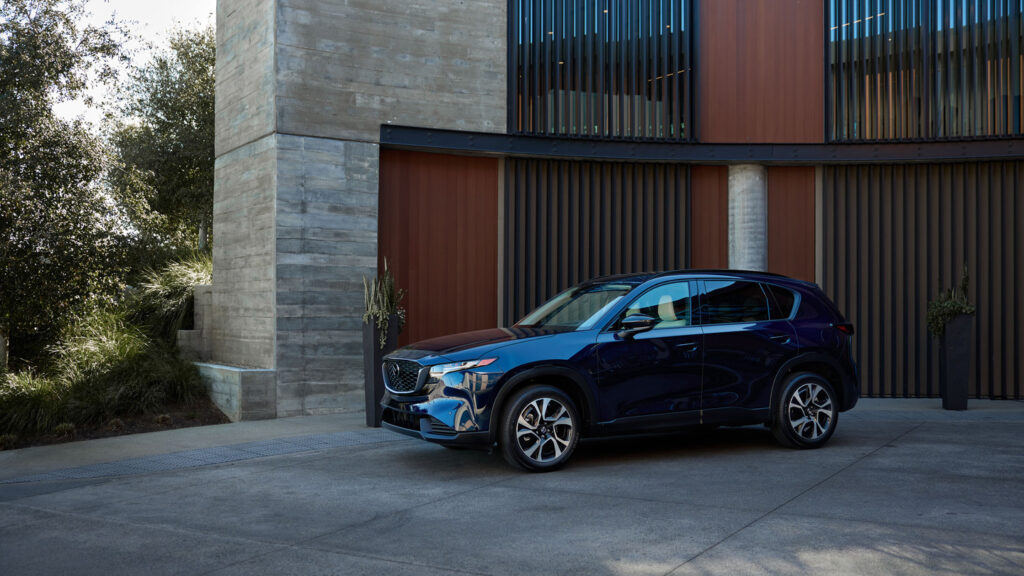
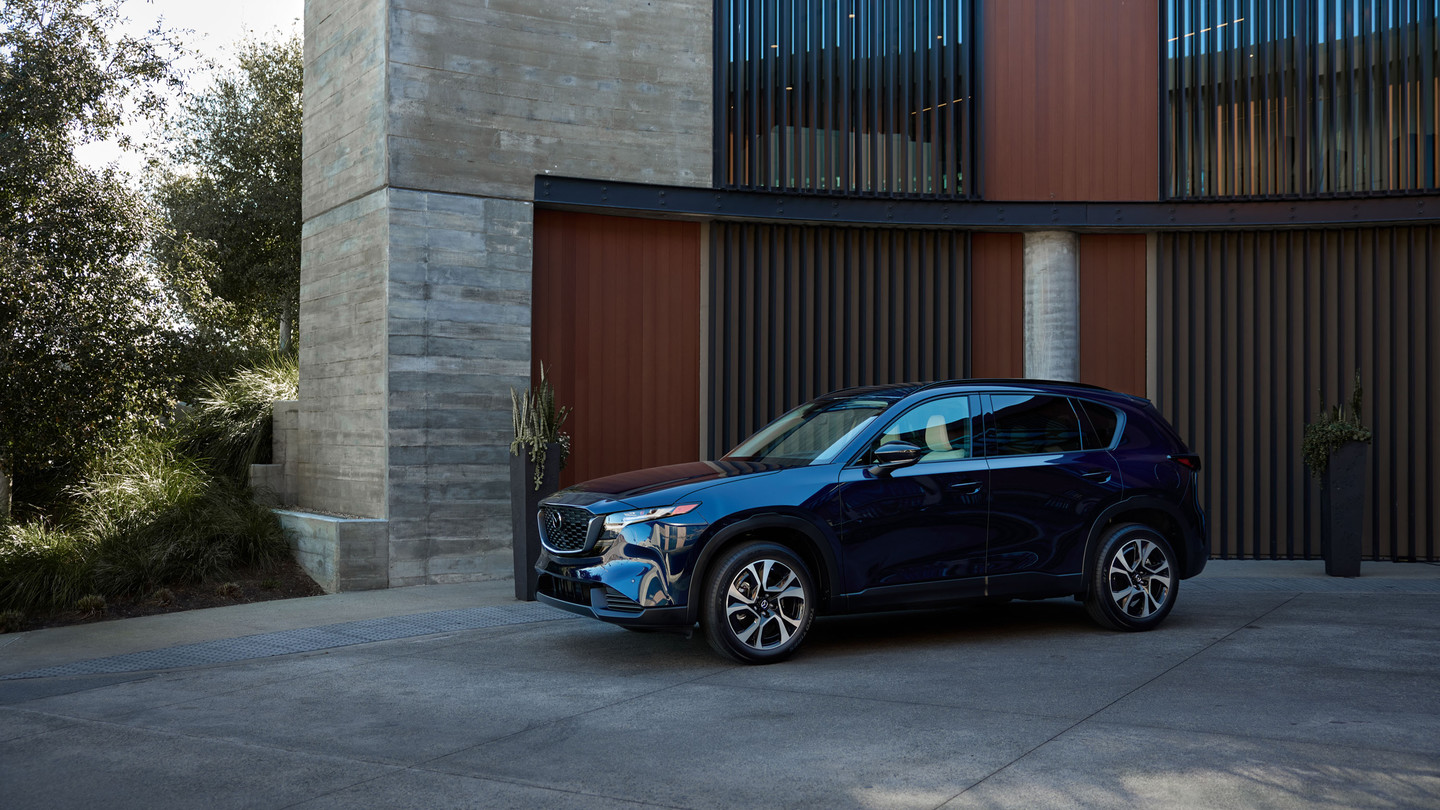
Choosing between the 2026 Mazda CX-5 and the 2026 Toyota RAV4 usually comes down to how each SUV feels behind the wheel and lives with day to day, not just the numbers on a window sticker. Both arrive with standard all-wheel drive and five-passenger practicality, but the character underneath is different enough to matter.
This comparison looks at driving feel, cabin quality, and daily utility side by side, so the choice is easier before you ever set foot on a lot.
| Spec | 2026 Mazda CX-5 (GX) | 2026 Toyota RAV4 (LE Hybrid) |
| Touchscreen Display | 12.9-inch, standard | 10.5-inch |
| Drivetrain | i-Activ AWD, standard | AWD, standard |
| Engine | 2.5L I4, 187 hp / 186 lb-ft | 2.5L I4 hybrid, 236 hp |
| Fuel Economy (Combined) | 9.0 L/100 km | 5.5 L/100 km |
| Cargo Behind Rear Seats | 954 L | 1,070 L |
| Max Towing | 1,500 lbs (680 kg) | up to 3,500 lbs (1,588 kg)* |
| Instrument Cluster | 10.25-inch digital | 12.3-inch digital |
*RAV4 towing is 1,750 lbs (794 kg) on LE, rising to 3,500 lbs (1,588 kg) on XLE grade and higher.
The CX-5’s 2.5L four-cylinder makes 187 hp and 186 lb-ft of torque, paired with a 6-speed automatic and standard i-Activ AWD. Mazda recalibrated the engine for sharper throttle response, and G-Vectoring Control Plus now adds an electronic brake limited-slip differential that helps the CX-5 hold its line through a curve. Drivers pick from Normal, Sport, and Off-Road settings through Mi-Drive, which adjusts throttle mapping and AWD torque split.
The RAV4 Hybrid’s 2.5L four-cylinder and electric motors produce a system total of 236 hp, and its 5.5 L/100 km combined rating on the LE grade beats the CX-5’s 9.0 L/100 km. But that hybrid system routes power through a continuously variable transmission tuned for smoothness, while the CX-5’s conventional automatic and driver-tunable AWD respond more directly to throttle and steering inputs on a curvy road or a quick highway merge.
Toyota also offers a RAV4 Plug-in Hybrid with up to 89 km of electric-only range and 324 hp of system output, extending that efficiency story further. But plugging in for daily range adds a home charging routine, something CX-5 owners skip entirely with regular unleaded and no cables to manage.
Cabin materials on the CX-5 move from cloth on GX to leatherette-and-cloth on GS, and leather with heated and ventilated front seats on GT. Rear seat passengers get 1,012 mm of legroom, 1,020 mm of headroom, and 1,412 mm of shoulder room, plus a rear bench that reclines with a 40:20:40 split. Every CX-5 pairs a 12.9-inch touchscreen, 15.6-inch on GT Premium, with a 10.25-inch digital cluster and Google built-in technology, including Google Assistant, with Gemini AI arriving in a future update.
The RAV4 Hybrid’s cabin groups the touchscreen, drive mode selector, and storage into a single centre stack, with a shifter, cup holder, and storage bin built into the console. LE trim comes with fabric upholstery and a 10.5-inch touchscreen running wireless Apple CarPlay and Android Auto from the base grade, a connection that stays wired on the CX-5 until GS.
But every CX-5 grade includes Google built-in technology from the base GX, so navigation and voice commands work through the vehicle itself rather than depending on a paired phone. The CX-5 GT also adds a 12-speaker Bose system, ahead of the 9 speakers on the RAV4’s XSE grade.
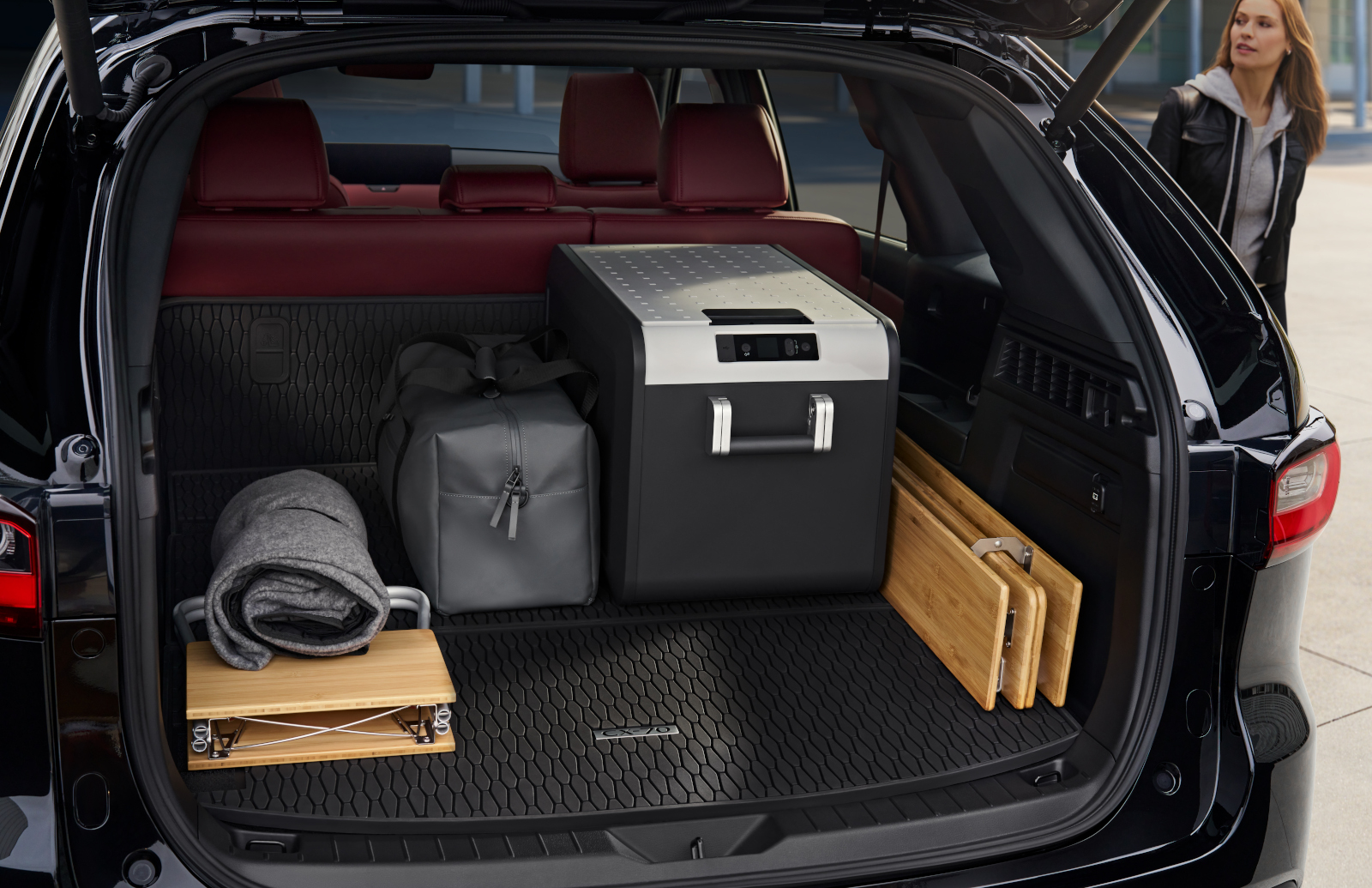
Behind the rear seats, the RAV4 Hybrid holds 1,070 L of cargo, more than the CX-5’s 954 L in the same configuration. Fold the CX-5’s rear seats flat, though, and the total load floor opens to 1,882 L, useful for hockey bags, flat-pack furniture, or a full weekend load in one trip.
Towing tells a similar story. The RAV4 Hybrid is rated to pull up to 3,500 lbs (1,588 kg) on XLE grade and higher, well past the CX-5’s 1,500 lbs (680 kg) rating. But most compact SUV owners never tow at all, and the extra chassis tuning and steering feedback that come standard on every CX-5 grade show up on every commute, not just tow days.
Both SUVs come with a full driver-assistance suite as standard. The CX-5 includes Mazda Radar Cruise Control with Speed Limit Assist, Smart Brake Support front and rear, Blind Spot Monitoring, and Driver Attention Alert. The RAV4 pairs Toyota Safety Sense 4.0 with Dynamic Radar Cruise Control, Lane Tracing Assist, and Blind Spot Monitor with Safe Exit Alert.
The lists overlap closely on core protection, but the CX-5’s rearview camera adds a tow-hitch guide, a feature suited to owners who occasionally hitch a small trailer or bike rack without a spotter.
For shoppers cross-shopping these two, the CX-5 makes its case through details that show up every day: a chassis tuned for sharper steering and throttle response, cabin materials that scale from cloth to full leather, a 12.9-inch touchscreen standard from the base grade, and a full driver-assistance suite without climbing the trim ladder. The RAV4 Hybrid answers with a stronger fuel economy rating and a higher tow rating, but neither changes how the CX-5 feels on a daily commute or how its cabin holds up to family use.
Standard AWD, Mi-Drive modes, and G-Vectoring Control Plus give the CX-5 a more connected feel behind the wheel, while its Bose-equipped GT grade and Google built-in technology bring cabin quality that does not require chasing the top trim. That mix gives the CX-5 a well-rounded case for drivers who want a compact SUV that feels rewarding to drive and easy to live with.
The 2026 Mazda CX-5 pairs a 187-hp SKYACTIV-G engine with standard i-Activ AWD, Google built-in technology, and cabin materials that scale from cloth to leather across its GX, GS, and GT grades.
Visit Planète Mazda to test drive the 2026 CX-5 and see how it feels on the road. Ask our team about trim options and find the CX-5 grade that suits your daily drive.