Sales: 579-218-0250
Collision Centre: 514-636-8750
Service: 579-218-0250
Parts: 579-218-0250
Book Service Appointement: 579-218-0250

Sales: 579-218-0250
Collision Centre: 514-636-8750
Service: 579-218-0250
Parts: 579-218-0250
Book Service Appointement: 579-218-0250
Mazda’s SUV lineup puts two compact-ish crossovers close enough in price and character that shoppers often cross-shop them directly: the CX-30 and the CX-5. Both ride on AWD, both carry Mazda’s driver-focused tuning, and both come from the same design language. The real split shows up once you start thinking about parking, rear-seat room, and how much gear you need to haul on a given Saturday.
For Quebec shoppers weighing tight city streets against family cargo runs, that size gap matters more than a spec sheet suggests. This comparison breaks down where the CX-30’s smaller footprint pays off, where the CX-5’s added room changes the math, and how each trim ladder builds out from there.
| Spec | CX-30 | CX-5 |
| Length | 4,395 mm | 4,690 mm |
| Width (mirrors out) | 2,040 mm | 2,077 mm |
| Height | 1,568 mm | 1,690 mm |
| Wheelbase | 2,652 mm | 2,815 mm |
| Ground clearance | 203 mm | 204-209 mm |
| Turning circle | 10.6 m | 11.2 m |
| Cargo, behind rear seats | 572 L | 954 L |
| Cargo, seats folded (max) | 1,280 L | 1,882 L |
| Base engine | 2.5 L I4, 191 hp / 186 lb-ft | 2.5 L I4, 187 hp / 186 lb-ft |
| Available turbo engine | 2.5 L turbo I4, up to 250 hp / 320 lb-ft | Not offered |
| Drivetrain | AWD | AWD |
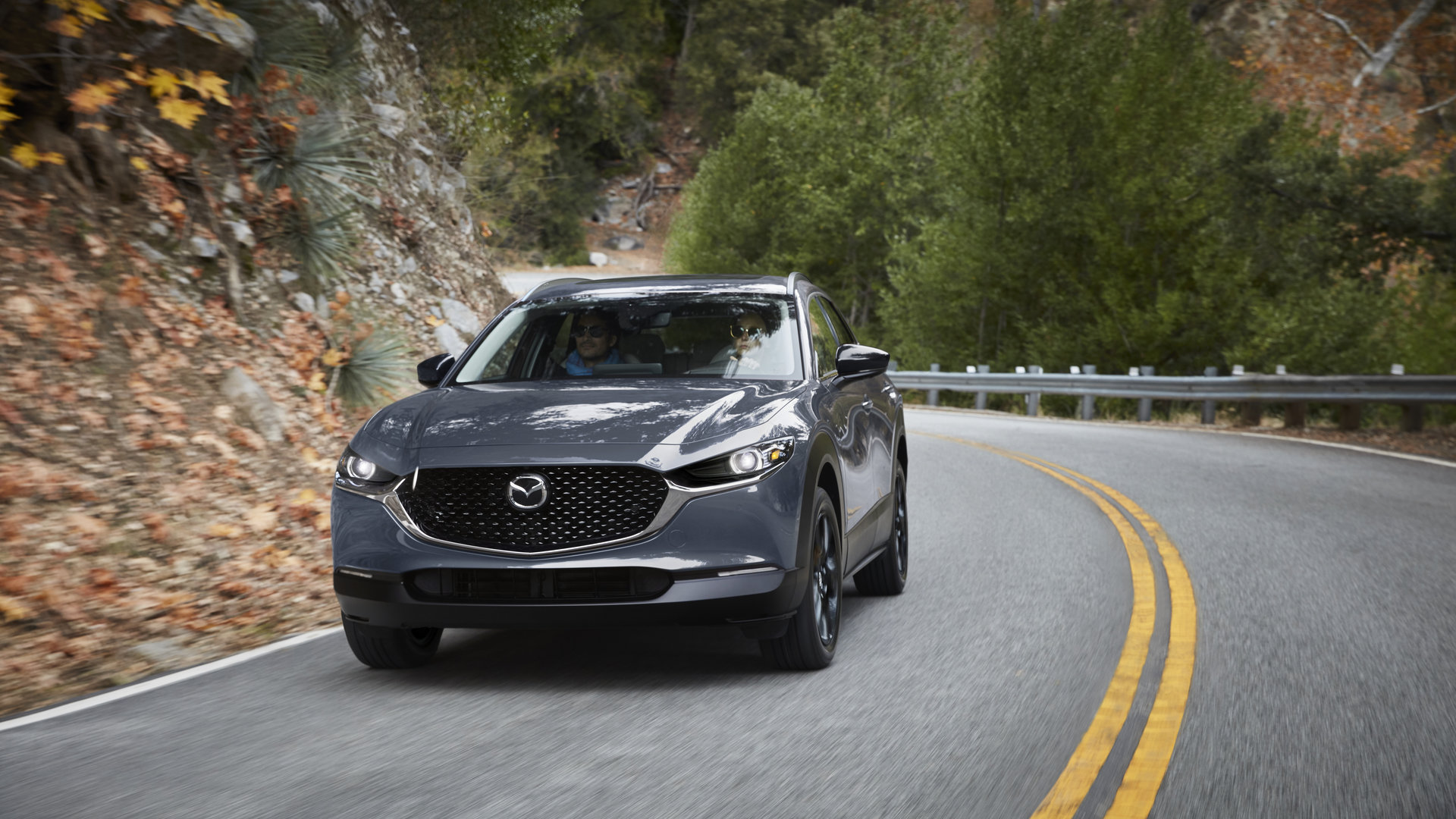
The CX-30 measures 4,395 mm long with a 10.6 m turning circle, noticeably tighter than the CX-5’s 4,690 mm length and 11.2 m turning circle. On narrow streets, in condo garages, or backing into a compact parking spot, that smaller radius makes the CX-30 easier to place.
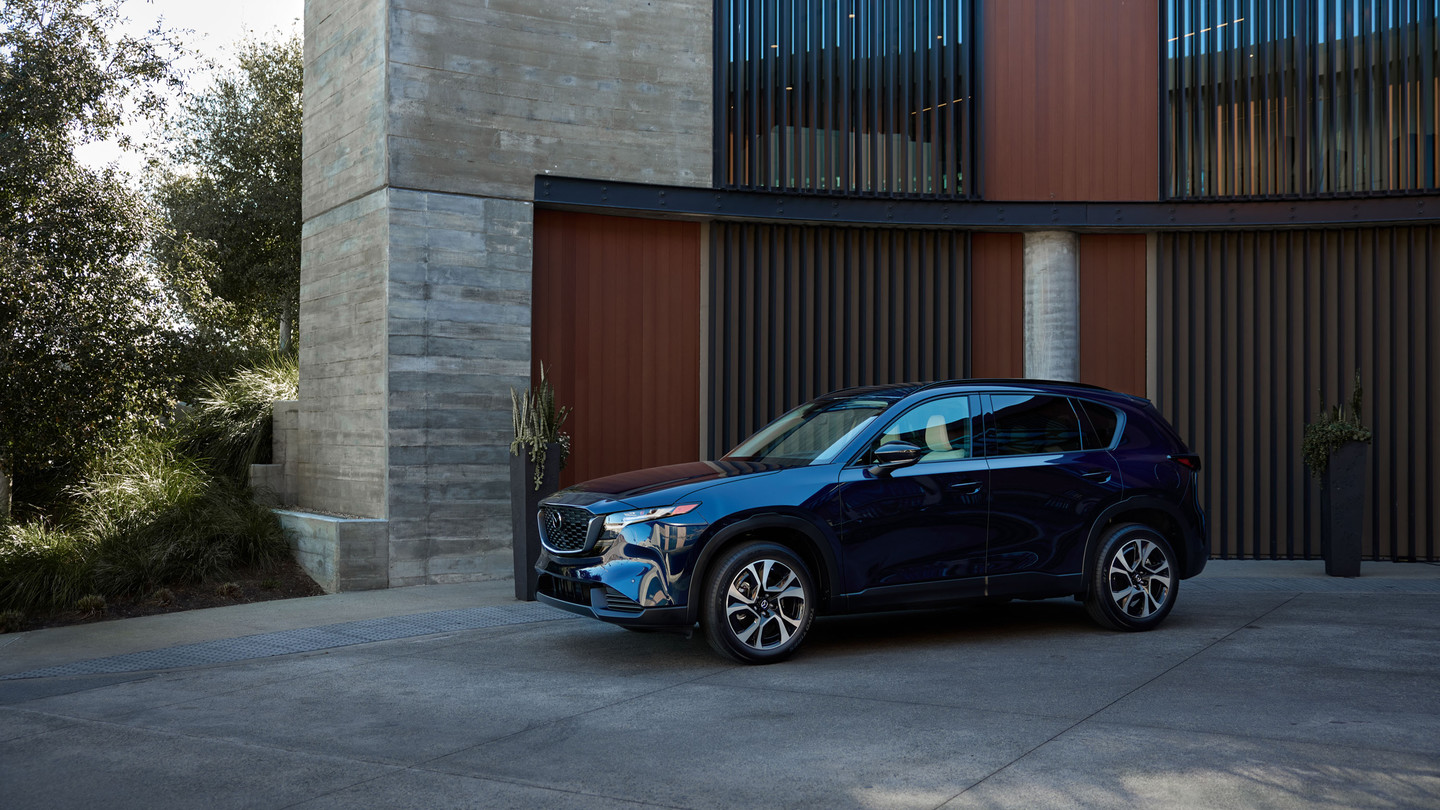
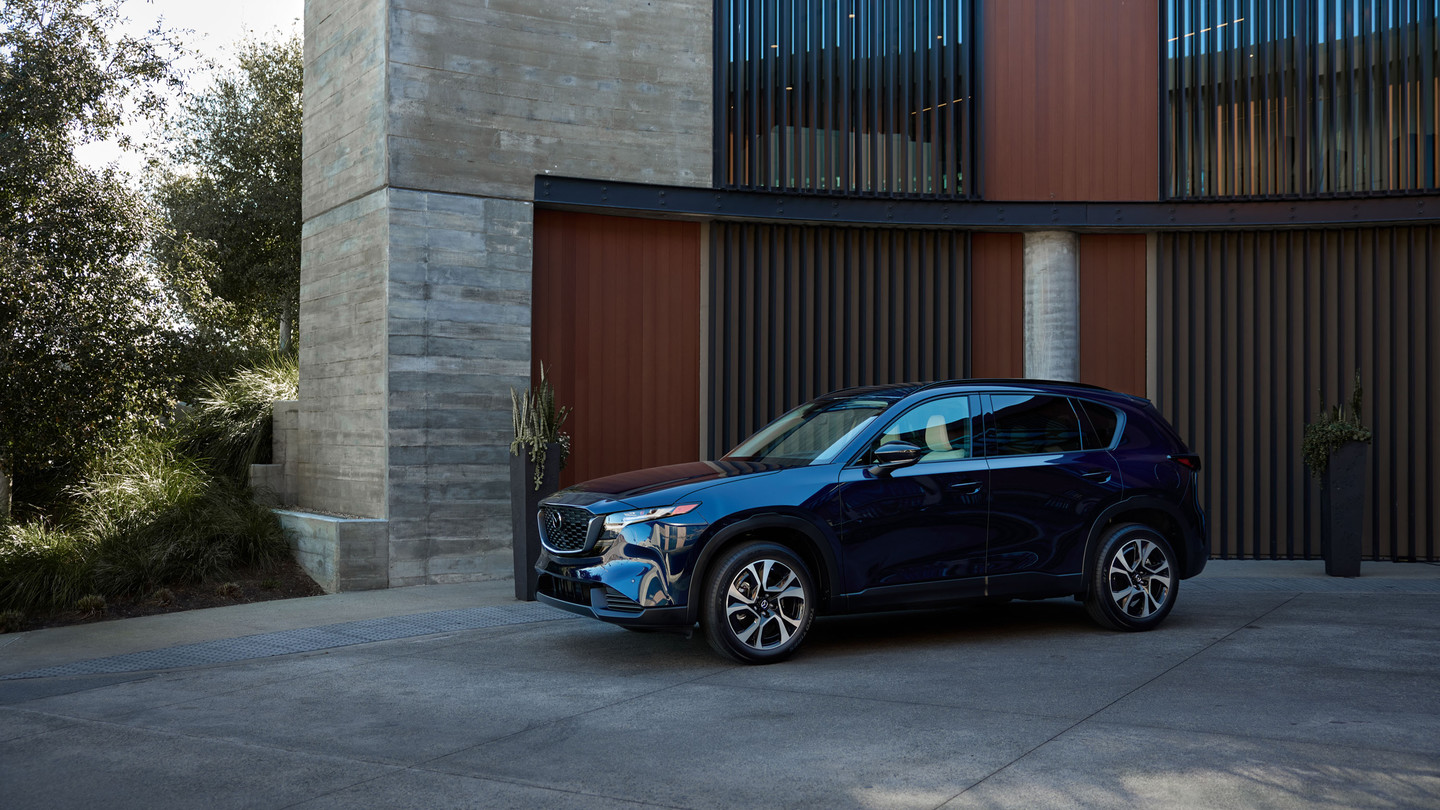
The CX-5 grew for 2026, gaining length and wheelbase over its predecessor to open up the cabin. That extra size is a trade: the CX-5 needs more room to manoeuvre and park, but the payoff shows up the moment you look inside.
Rear-seat comfort is where the size difference actually lands for passengers. The CX-5 offers 1,020 mm of rear headroom and 1,012 mm of rear legroom, with wider door openings that let larger child restraints be installed without sliding or folding the front seat.
The CX-30 still delivers 973 mm of rear headroom, a reasonable number for a smaller body, but its narrower doors and tighter rear bench make it a better fit for one or two adults in back rather than a full family bench of car seats and gear.
Behind the rear seats, the CX-30 holds 572 L and the CX-5 holds 954 L; fold the rear seats down and the CX-30 opens to 1,280 L while the CX-5 stretches to 1,882 L. Both figures are measured the same way, behind the rear seats and with them folded, so the gap is a direct one.
That difference plays out with hockey bags, strollers, and luggage for a weekend away. The CX-30 handles routine grocery runs and a couple of duffel bags without complaint; the CX-5 has the depth for bulkier loads without needing to fold a seat down first. The CX-5’s GS and GT trims also add a power liftgate with programmable height, useful when your hands are already full.
Both SUVs come standard with AWD and Mazda’s G-Vectoring Control Plus, tuned to shift engine torque subtly through corners and keep the chassis settled on rain-slicked or gravel roads. Neither one asks you to pay extra for all-wheel traction.
Where they diverge is engine choice. The CX-5’s 2.5 L four-cylinder makes 187 hp and 186 lb-ft across every trim, rated at 9.0 L/100 km combined. The CX-30 starts with a 191 hp, 186 lb-ft version of the same displacement rated at 8.2 L/100 km combined, and the GT trim can be optioned with a 2.5 L turbo four making up to 250 hp and 320 lb-ft on premium fuel (227 hp and 310 lb-ft on regular).
That turbo option doesn’t exist on the CX-5, so drivers chasing more power without stepping up in size only find it in the CX-30.
On the road, the CX-30’s smaller body and shorter wheelbase translate to a quicker, more tossable feel through corners and lane changes. The CX-5’s longer wheelbase settles the ride at highway speed and keeps the cabin calmer over rough pavement, which matters more once you’re loaded up for a road trip.
The CX-30 GX opens with an 8.8-inch touchscreen, an eight-speaker system, and wired Apple CarPlay and Android Auto. Step up to GS and the screen grows to 10.25 inches with wireless phone connectivity and wireless charging added. The GT Kuro Turbo tops the range with a 12-speaker Bose system.
The CX-5 starts larger: the GX comes with a 12.9-inch touchscreen and an eight-speaker system, and the GT can be optioned with a 15.6-inch display and a 12-speaker Bose setup through the Premium Package. Interior materials climb from cloth on the GX to leatherette and cloth on the GS to leather on the GT.
Both lineups carry the same core safety suite as standard equipment: Mazda Radar Cruise Control, Smart Brake Support, Blind Spot Monitoring with Rear Cross Traffic Alert, Lane Departure Warning with Lane Keep Assist, and Driver Attention Alert. Higher trims on each model add conveniences like a 360° View Monitor and an Active Driving Display, rather than filling safety gaps.
If your daily routine is mostly solo or two-person commuting, street parking, and the occasional grocery run, the CX-30’s shorter length and tighter turning circle are the deciding factor. It’s easier to place in a tight spot and quicker to react through city traffic.
If your routine includes car seats, hockey gear, or regular trips with more than two passengers, the CX-5’s rear-seat room and larger cargo hold change the equation. The 954 L behind the rear seats and 1,882 L with them folded give you room the CX-30 simply doesn’t have.
For a driver who wants extra power without moving up in size, the CX-30’s optional turbo engine is worth a look. For a driver who wants a settled highway ride and room to grow into, the CX-5’s added wheelbase and cabin space are built for that job.
The CX-30 and CX-5 share Mazda’s AWD system, G-Vectoring Control Plus, and the same standard safety suite, with body size and cargo room marking the real split between them for Quebec drivers weighing the two.
Visit Planète Mazda in Mirabel to sit in both the CX-30 and CX-5, check rear-seat room and cargo space for your own routine, and find the trim that matches how you actually drive.